The Intermediate Guide The Steps To Self Emptying Vacuum
What Is a Self-Emptying Robot Vacuum? Many robot vacuums come with an internal bin that needs to be manually emptied at the end of each cleaning cycle. Self-emptying bases are a premium feature that adds extra value to the robotic vacuum. Are they worth the regular cost? This review takes a closer look at the Shark EZ robot vacuum and its self-emptying base. What is self-emptying? Self-emptying robot vacuums are robot cleaners that come with an internal storage system. This usually takes the form a small dustbin which automatically emptys itself when it is full. This makes it unnecessary to manually empty the dustbin after every cleaning session and reduces the amount of time that you have to devote to maintenance. You can tell when the storage bin is full using an open window. These features are offered on models manufactured by iRobot Ecovacs and Shark. This technology is fairly recent and is available on many robot vacuums. However, a few models are able to provide this feature at a a much more affordable price than you would expect considering their advanced capabilities. For example the Shark RV912S EZ Robot Vacuum is among our top self-emptying vacuums can be bought for less than $400. The majority of robot vacuums come with dustbins that are full after a couple of cleaning cycles and require manual emptying prior the next cleaning run. This can be a long process, especially in households where allergens and pet hair build up quickly. The process of emptying a robotic vacuum is also messy, as you may have to get your hands on the dirty contents, and risk releasing irritants into air. Self-emptying eliminates both of these issues by allowing robots to automatically transfer dirt and other debris from their bins to a larger, enclosed storage space. This is usually an enclosed canister or bag inside the base station, which is easily removed and emptied when needed. These bags also be used to filter out dust particles and trap them, which is an advantage for those who suffer from allergies. Another advantage of the self-emptying system is that it's less abrasive than the majority of robot vacuums even when emptying the container. The transfer of debris can be quite loud. This is not a problem for most people but it can be a concern for pets and small children. The most effective self-emptying robots come with a variety of useful features like Wi-Fi and smart home connectivity, so you can control them from your phone or other connected devices including automatic/set run time and a mapping feature, vacuum/mop switching options, and more. How can a self-emptying vacuum function? 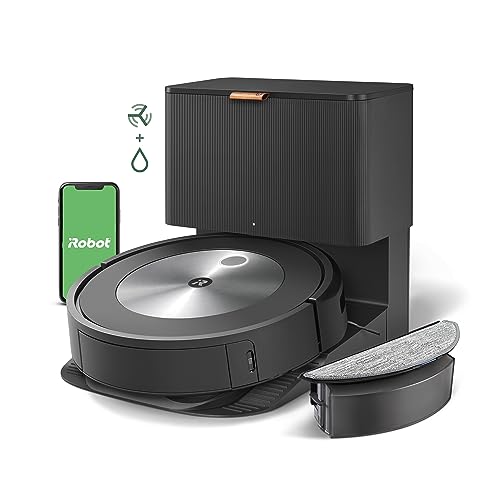 A standard robot vacuum has an internal storage system. It is typically smaller than a dust bin. Depending on the size of your house and how dirty your floors are, they must be cleaned frequently. By adding a self-emptying function to the robot vacuum eliminates the problem by reversing to its base to empty the onboard dust bin into a secondary dustbin. This is also referred to as Clean Base Dirt disposal (iRobot), Auto Empty Stations (Ecovacs), or Self-Emptying Bases (Shark). Many models of robot vacuums that have this feature are also fitted with a separate dock that can be used to mop so that the machine will be able to serve two purposes at home. Some even have different modes for vacuuming and mopping, allowing you to achieve the specific cleaning style you want. These features are useful, however they can be costly. They are not for everyone. They also add additional steps to installing and using a robotic vacuum, which can be offputting for some consumers. Shark RV912S EZ Robot Vacuum is a self-emptying robotic vacuum that is still reasonably priced in comparison to other robot vacuums. This particular model has powerful suction as well as 3D light scanning and precise object recognition, which means it can tackle almost anything that's on your floors. The large base can hold up to 60 days' worth of debris, and it will automatically returns to its charging dock to empty itself when it's full. One aspect that isn't always apparent is how noisy self-emptying robots can be. The power of the device is controlled by certain settings however the process of emptying the container can take as long as just a few minutes, and can be quite loud. For this reason, some users find the noise to be a disadvantage of these devices. How often does a self-emptying air purifier have to be empty? As with regular robot vacuums self-emptying models scour your floors for dust, hair and crumbs, then return to their base to charge. Some models that self-clean come with docking stations that double as disposal units. They automatically empty the bin of the robot cleaner into an additional storage container once it is full. There's no need to empty the half-liter container after every use, or risk causing an obstruction. The docking mechanism on some self-emptying bots can hold dirt for up to 60 days before it has to be cleared away. This means they need to be emptying less frequently than conventional robots. It is important to note that the transfer process can be loud and alarm pet owners or other pets around. This feature might not be suitable for households with sensitive ears. To avoid clogs that can impact the robot's performance you should regularly clear and clean the robot's filter. Also, you should check the robot's power button to make sure it's connected and charged prior to each use. Are self-emptying vacuums really worth the cost? Many robot vacuums have self-emptying dustbins that eliminate the requirement for you to empty the bin manually after each cleaning session. self-emptying robot vacuums are more costly than traditional vacuums, but they can save your time by removing the necessity of manually emptying the bin every time you do a sweeping. A self-emptying robot vacuum might appear to be a luxury that isn't needed however, it could be a good investment if your home is busy or you have pets that shed. You might also want to think about it if you have chronic allergies or live in a dusty area. Self-emptying vacuums operate by docking with a bigger base station, which has a hose that pulls the debris from the robot's dustbin into the larger receptacle. This stops the dustbin from overflowing and clogging, which could cause the vacuum to smell or lose suction. In the majority of instances, you'll need empty the bin every 30 or 60 days, based on how often you use the device. Many self-emptying vacuums can be set to connect to Wi-Fi, which makes them simple to control from tablets or smartphones. Many are compatible with Amazon Alexa and Google Home that let you make use of voice commands to control your robot. This is particularly useful for those who have a busy household or are on a tight schedule. It helps to keep the house clean when you're busy. The majority of self-emptying robotic vacuums come with a powerful motor which is able to effortlessly pick up pet fur dust, crumbs, dust and other debris from hardwood floors as well as carpets with a low pile. They can also be programmed to automatically mop and vacuum according to the basis of a set schedule, which makes your life much simpler. The iRobot j7+ is the top robot vacuum for self-emptying, mapping, creating virtual borders and detecting obstructions. This powerful robot vacuum is sure to please. Shark IQ XL offers many of these features for a lower cost.